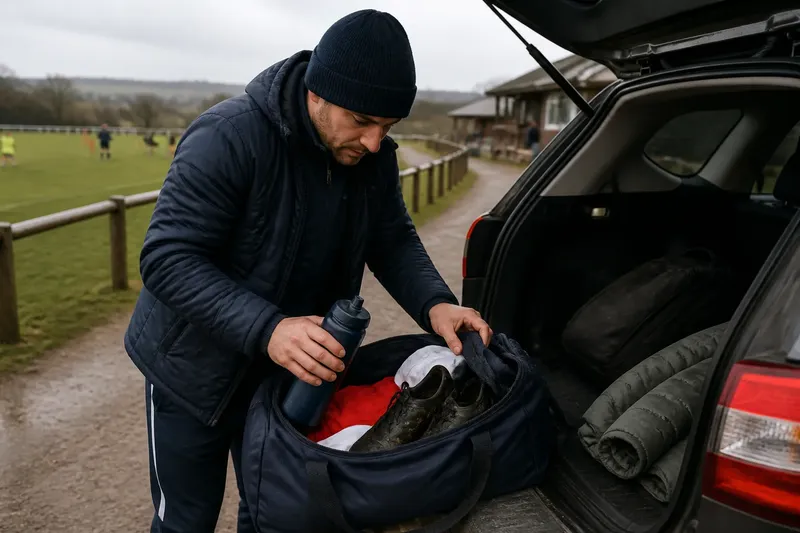
Players, Helpers and Hosts: How a Small Club Shares the Work
Small club volunteer roles help spread recurring jobs across players, helpers and hosts, so each person knows what to do and the club can keep running.
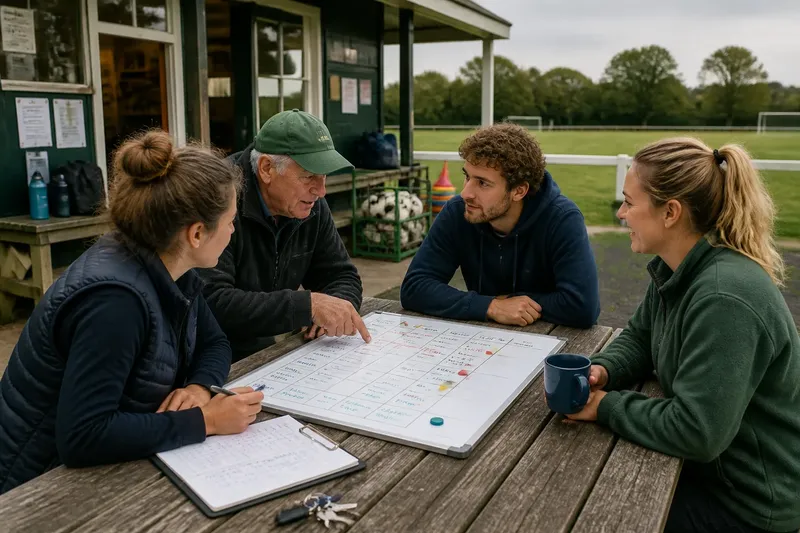
When a small club’s fixture list is ready but the clubhouse key is still with one busy volunteer, the problem is not a lack of goodwill. It is a missing handoff. Small club volunteer roles work best when recurring jobs are visible, sized to fit real lives, and assigned with a clear finish point.
There is no single right structure for every rural club. A handful of regulars may prefer a simple rota; a larger group may need named role owners; a club with uneven attendance may do better with event teams. Compare the options by asking who can take part, how often the task recurs, and what happens when someone is away.
What should a club divide before it assigns roles?
Start with the work, not job titles. Write down what must happen across a typical month or season: opening and closing the ground, preparing equipment, communicating fixture changes, welcoming visitors, arranging refreshments, and keeping shared spaces orderly. Include tasks that happen behind the scenes as well as those people notice on matchday.
Next, mark which jobs repeat, which depend on a particular event, and which need a specific skill or authorization. This keeps a club from assigning someone a vague title such as “general helper” while leaving the actual workload hidden.
- Recurring: identify the occasion or interval that triggers the job, such as each home fixture or each committee meeting.
- Bounded: describe the start and finish, such as setting out benches and returning them to storage.
- Visible: note who needs to know the job is complete, such as the captain, grounds contact, or next volunteer.
- Supported: name the person who can answer questions or cover an absence.
Keep the first list plain. A notebook, shared calendar, or noticeboard is enough if members can find and update it.
Would named role owners suit your club?
Under this approach, one person owns a recurring function and keeps track of its moving parts. A fixture coordinator might confirm availability and share changes; a facilities contact might monitor access arrangements and pass repair concerns to the appropriate person. Ownership does not mean doing every task alone. The role owner makes sure the job has a route to completion.
This model suits clubs with a steady core of members, tasks that require continuity, or responsibilities that benefit from one known contact. It can also help new volunteers understand where to take a question instead of guessing.
Its risk is that a role quietly grows until it becomes a second job. Keep the description short, list what is outside the role, and name a deputy or handoff method. If a job depends on one person’s memory, record the essential information where an agreed backup can access it.
Say a club’s secretary also handles fixture updates and visitor queries. The committee could separate those tasks: one named contact updates the fixture calendar, while another welcomes visiting teams. The expected observable result is that each request has a clear destination, and the secretary is no longer the default contact for every detail.
Could a rota spread small jobs more fairly?
A rota shares defined tasks across a group over a repeating period or sequence of events. One member may open the pavilion for a home match, another may set out equipment, and a third may check that the shared area is ready to be left tidy. The rota can be written on a board, kept in a club calendar, or sent through the club’s usual messaging channel.
This option suits jobs that are short, predictable, and easy to explain. It also works when many members can do the task after a brief handover. A rota makes participation visible, but it should not assume that every person has the same availability, mobility, transport, or confidence.
Make swaps straightforward. Ask members to arrange a replacement and update the shared record, rather than leaving the organizer to discover a gap on the day. Keep a small pool of willing backups for occasions when a swap is not possible.
Rota tasks need a clear standard, not an elaborate manual. A short note can say where the key is collected, what equipment belongs out, and who to contact if something is missing. For work involving access, equipment, or safety, follow the relevant instructions and local requirements; ask a qualified person where that is necessary.
When are event teams a better fit?
An event team gathers people around a particular fixture, tournament, working bee, or social occasion. Instead of assigning a standing job for the whole season, the club names a coordinator and offers several small tasks for that event: greeting visitors, preparing refreshments, keeping the noticeboard current, or helping with pack-away.
This suits clubs whose attendance changes from week to week, members who can help occasionally but not regularly, and activities that need extra hands only at certain times. It can also give newcomers a low-pressure way to contribute alongside someone experienced.
The trade-off is that each event needs coordination. Set out the jobs early, give each one a named contact, and confirm who has agreed to help. Avoid asking for “any volunteers” without saying what the work involves or how long someone is expected to stay.
Use event teams for bursts of work, not for responsibilities that need daily attention or confidential continuity. If the same event coordinator ends up organizing every occasion, rotate the lead or share the planning tasks so the flexible option does not become a hidden permanent post.
How do you choose an approach and keep it workable?
Match the structure to the task rather than choosing one system for the whole club. A fixture update may need a named owner; setting out cones may fit a rota; a large club day may call for an event team. Many small clubs use a mix, provided members can tell which arrangement applies to each job.
- List the recurring work. Ask members what they already do, including quiet tasks that are easy to overlook.
- Group similar jobs. Keep work that needs the same information together, but split a role if one person’s load is too broad.
- Choose the lightest workable structure. Use an owner for continuity, a rota for repeatable short jobs, or an event team for occasional surges.
- Set a clear handoff. Record where updates go, what “done” means, and who can cover an absence.
- Review after a real club cycle. Ask what was missed, what felt too large, and which tasks members would willingly repeat.
Make the review a practical conversation, not a judgment of anyone’s commitment. If a job repeatedly goes undone, the task may be unclear, poorly timed, or too large for the available group. Reduce or redesign it before asking the same person to absorb more.
What do club members often ask about sharing work?
How can someone volunteer without joining the committee?
Offer bounded jobs that do not require committee authority, such as greeting visitors, updating a fixture notice, or helping with a single event. Tell the volunteer who will answer questions and how to decline future turns.
What if nobody volunteers for an essential task?
Clarify what must be done, how often, and what support is available, then ask members directly rather than relying on a general appeal. If the club still lacks capacity, consider reducing the activity or seeking appropriate local support instead of quietly placing the whole burden on one person.
How should a club handle missed turns?
Use a calm, consistent handoff: contact the person, check whether they can still do the task, and arrange a named backup if not. Update the rota or event record so the next volunteer is not left to guess.
How often should roles be reviewed?
Review them when the season or activity pattern changes, and whenever a role becomes difficult to cover. Keep the check-in short: confirm that the task still matters, the description is clear, and the workload remains manageable.
How can the club make participation feel fair?
Fairness does not mean every member performs the same task or gives the same amount of time. It means the club makes work visible, invites people in ways they can realistically answer, and avoids treating availability as an unlimited resource. Offer different kinds of contribution: a regular contact role, a brief matchday task, or occasional help at a club event.
Thank people specifically for the work they did, and close the loop when a task is complete. A note that the equipment is back in its place or the visiting team has been welcomed tells the next person what is settled. It also helps members see that the club runs through many modest contributions, not just the most visible roles.
For small club volunteer roles, choose the simplest arrangement that gives each task an owner, a finish point, and a backup. Put that information where members already look, then revisit it when the work or the people available change.