From Common Ground to Playing Field: A Short History of the Village Green
Village green history shows how shared open space shifted from grazing and gathering to recreation—and why its mixed public uses still matter today.
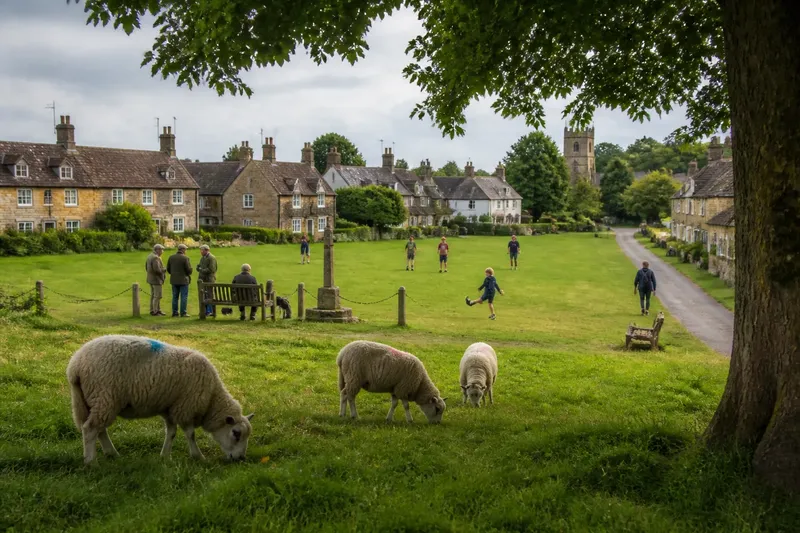
Village green history begins with a practical question: who could use an open patch of ground, and for what? A green was not simply a sports field waiting to be marked out. It could serve nearby households as grazing land, a meeting place, a route through the settlement, and a setting for play, with different uses overlapping across the year.
That shared character is the central story. As communities changed, some greens became more closely associated with organized recreation, while others remained everyday open spaces. Their history is less a straight line from common land to playing field than a continuing negotiation over access, custom, and purpose.
What made a village green common ground?
A village green was generally an open area used by people living nearby, but the word “common” did not mean that every person could do anything there. Local customs and rights shaped who could graze animals, gather materials, cross the land, or hold activities. The details varied from place to place.
Some green spaces were part of a wider landscape of common land; others developed as open ground within or beside a settlement. A green might sit near houses, a church, a road junction, or a stream. Its location made it useful in several ways at once: people could pass through it, meet there, and use it for work or leisure without traveling far.
That mixture matters when considering the past. A patch of grass can look like a defined recreation area now, but its earlier role may have depended on informal access and established habits rather than a single formal purpose. Local records, old maps, boundary features, and community accounts can help reveal those layers.
How did daily work shape the green?
Work often set the rhythm of common open space. Where local rights allowed it, residents might graze animals or use the land for other everyday needs. A green could also function as a convenient open area for gathering, trading news, or pausing on a journey. These activities were shaped by the seasons and the demands of village life.
Because use was shared, practical conflicts could arise. Animals might wander across an area where children played, or a gathering could occupy space needed for another purpose. Communities managed such friction through local expectations and rules, though customs were not identical everywhere. The green was useful partly because it was close at hand, but that same accessibility meant people had to accommodate one another.
Say a village’s open ground is used for grazing in one season and for a community gathering in another. Residents who agree on when animals should be moved can keep both uses possible. The visible result would be a space that changes function without being permanently assigned to either activity.
When did recreation become more organized?
Recreation did not suddenly arrive when work disappeared. Play and contests could take place alongside ordinary duties, and informal games did not need marked boundaries or a club structure. Over time, some communities developed more regular sporting customs, with agreed occasions, rules, or designated areas.
That shift could change how a green was understood. A broad, open surface suited games that needed room, while a well-used route or grazing area might limit where and when play could happen. Organized recreation brought practical questions: who could set the rules, how the ground should be kept, and whether other users retained access during an event.
It is helpful to distinguish between a place being used for sport and a place being reserved for sport. A game held on common ground did not automatically end other uses. Where boundaries, schedules, or facilities later became more defined, the balance between shared use and sporting use could become more visible.
Why did some greens become playing fields?
Communities often value open ground for recreation because it is central and familiar. A green can make sport part of ordinary village life: people can watch from nearby, meet before or after a game, and use the same space for other events. In some places, that role encouraged more deliberate care or the creation of a clearer playing area.
But a playing field is not always the same thing as a village green. A field may be managed for a particular sport, with surfaces or boundaries suited to that purpose. A green may retain a more flexible character, even if sport is one of its best-known uses. The names can overlap in everyday speech, while the land’s history and current arrangements remain distinct.
Changes in land ownership, local administration, and recreation habits could all affect a green’s future. A community might formalize a sporting use, protect open access, or adapt the space for several purposes. These developments did not follow one national pattern; local circumstances shaped the outcome.
What changed when shared use met formal rules?
As recreation became more organized, informal custom increasingly sat beside written rules and management decisions. A committee or local authority might care for a surface, set event arrangements, or decide how competing uses should fit together. Formal management can make a space easier to maintain, but it can also raise questions about whose needs receive attention.
Boundaries are one sign of that change. A marked pitch or a designated playing area can help a game proceed, yet permanent features may affect walking routes, gatherings, or other customary activities. The important historical point is not that formal rules are always better or worse. It is that they make choices about access and purpose more explicit.
For a present-day visitor, local signs and notices can show how the space is managed now. Historical maps or parish material may help explain how it was used before. Those sources answer different questions: one describes current arrangements, while the other can illuminate past boundaries and customs.
What questions help explain a village green?
Was every village green common land?
No. The term can describe an open space associated with a settlement, but ownership and local rights differed. A green’s name alone does not establish who held rights to use it.
Did villagers use greens only for sport?
No. Recreation was one part of a broader pattern that could include work, travel, gathering, and community occasions. The combination depended on local needs and customs.
How can I tell what a local green was used for?
Look for old maps, local histories, boundary features, and records held by a parish or local archive. Compare those clues with the space’s present layout, while remembering that a map may show boundaries without explaining everyday habits.
Is a village green the same as a recreation ground?
Not necessarily. A recreation ground may be set aside and managed chiefly for leisure, while a village green can carry a longer history of mixed use and local custom. The precise distinction depends on the place and its arrangements.
How can a green keep its shared character?
A shared space remains useful when its different purposes are considered together. A fixture that supports sport may need to leave room for people crossing the ground; an event may need to account for neighbors and ordinary use. Small decisions about timing, maintenance, and access can determine whether the space feels open to more than one group.
For anyone exploring a local green, notice how people use it beyond the main sporting activity. Look for paths, gathering spots, old trees, open edges, and signs of informal play. These details can point to a place shaped by overlapping routines rather than a single design.
Village green history offers a practical lesson for today: shared ground is not preserved by treating it as empty. Its character comes from use, memory, and the arrangements that let different people belong there. When you visit, check the local rules, then leave room for the next person’s reason for being on the green.