A Quiet Winter Walk Around the Local Playing Field
A quiet winter walk around the local playing field reveals how paths, boundaries and small signs of use show what the ground is like off-season.
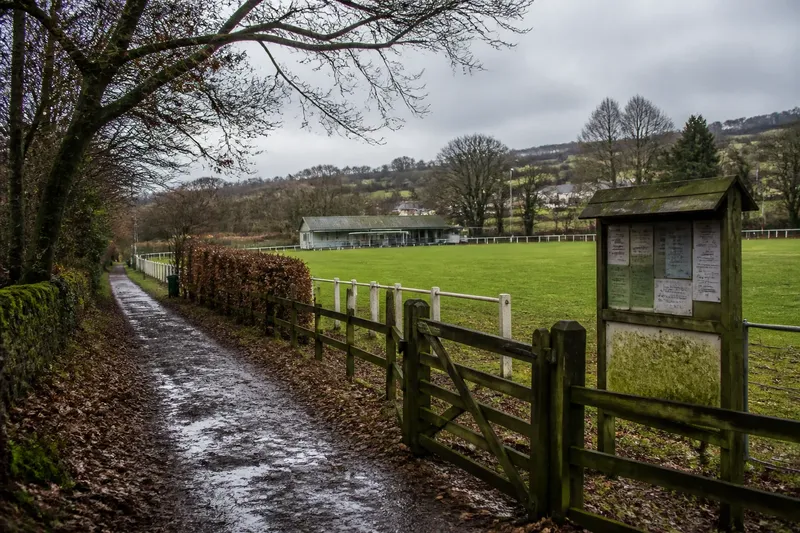
A quiet winter walk around the local playing field can show you more than a matchday visit: a worn gate approach, a path that skirts soft ground, or a notice board still carrying useful details. Choose a public route around the edge, keep clear of closed areas, and let the field’s winter traces tell you how this sporting place is used beyond kick-off.
1. Start at the entrance and read the welcome
Pause where a visitor would naturally arrive. Notice whether the entrance is easy to identify from the road or footpath, and whether signs explain which grounds or facilities lie beyond it. A modest sign can make a place feel legible; a collection of old notices may leave a newcomer unsure which information still applies.
Look at the approach as well as the sign. Is there a gate, a shared path, a verge, or a space where people can wait without blocking others? In winter, mud and leaf litter may make the usual route less obvious. Don’t assume a gap in a fence is an invitation to enter; follow posted access information and stay on the public path.
Notice the tone of what is displayed. A hand-lettered welcome, a club name, or a clear request to keep dogs out of a playing area can all communicate something about how the ground is cared for. Avoid treating a faded notice as current policy, though. Its age is a clue to the place’s layers, not reliable permission.
2. Follow the paths without crossing the field
Take the route that naturally follows the perimeter rather than cutting across the playing surface. Paths often show how people move between a gate, a pavilion, a car park, or nearby homes. A broad, firm track may serve everyday walkers as well as players, while a narrower route can lead to a less-used entrance or a quiet corner.
Watch where the surface changes. Gravel may give way to grass; a path may rise above a damp hollow or curve around a tree. These changes help explain how the site meets the surrounding landscape. They also offer a practical cue for your walk: if the ground is soft, keep to the more durable route rather than widening a muddy edge.
Imagine you arrive on a gray afternoon and find the shortest path muddy near a gate. If a firm public route continues around the outside, follow it and observe where it reconnects with the entrance. The expected result is a clearer sense of the site’s circulation without leaving footprints across a resting playing surface.
3. What can the playing-field edges tell you?
Why does one boundary feel more open than another?
Compare a hedge, a low fence, a wall, or an open verge. Each creates a different relationship between the field and its surroundings: a hedge softens the edge, while a fence makes the limit more explicit. Look for breaks and gates, but don’t use them unless they are clearly open to the public.
What do trees and hedges change in winter?
Without full summer foliage, you can see the shape of branches, gaps in a hedge, and how much of the ground is visible from outside. These details may reveal a sheltered corner or a view toward nearby houses. Keep the observation simple; winter appearance alone does not tell you who maintains the boundary or why it was planted.
Where does the field meet other land?
Notice whether the boundary meets a stream, a lane, farmland, woodland, or a row of buildings. Such transitions give the playing ground its local character and help explain why its approaches differ. Treat private land and waterways as boundaries to observe from the public route, not as shortcuts.
4. Look for signs of use, not just signs of play
A field can be quiet while still showing the habits of the people who use it. Look for a swept patch near a doorway, footprints leading to a bench, or a path worn between the pavilion and the ground. These are small clues about movement and care, not invitations to enter buildings or touch equipment.
On the playing surface, you may see marks left by posts, lines, or routine maintenance. In winter, dampness can make some areas darker or more compacted. Observe from outside the field and avoid interpreting every patch as damage; weather, drainage, and ordinary use can leave similar traces.
Also notice what is absent. A bare touchline, an empty bench, or equipment stored away may simply reflect the season. A quiet ground is not necessarily neglected, and a busy-looking entrance does not prove that a match is taking place. Let visible evidence stay distinct from guesses about club activity.
5. Check signs, boards, and the place’s public face
From the route, look for a notice board, a fixtures panel, or a sign naming the club or facility. A board can show how the ground presents itself to visitors, even when it is not being used. You might see directions, contact details, an access notice, or a reminder about keeping the area tidy.
Read only what is visible from a public place. Don’t enter a fenced area to inspect a board, photograph people without reason, or rely on an old fixture notice as current information. If you want to attend an event later, use a current contact channel shown publicly or ask through the club’s normal channels.
Signs can also reveal the limits of what you know. A notice about a closed gate tells you to stay out; it does not need further interpretation. Where access depends on posted rules or local arrangements, follow the sign rather than assuming the whole site is open because one path is accessible.
6. Notice the sounds and views around the ground
Stop briefly at a safe place along the route and listen. Wind moving through bare branches, traffic beyond a hedge, or distant activity from nearby buildings can make the ground feel connected to its village rather than isolated from it. The soundscape may change as you pass from an open side to a sheltered one.
Look back toward the field from more than one angle. A pavilion may sit low behind a rise, or the ground may open toward a church, farm track, or line of houses. These views help you understand why the field feels the way it does without needing a match, a tour, or access to private facilities.
Keep the pause brief if the path is narrow, and step aside where others can pass. A quiet walk works best when it leaves room for the people who are using the route for their own errands or exercise.
7. What should you note before you leave?
Which entrance did you use?
Remember the public approach and any clearly posted access limits. This helps you return without confusing a private gate or service entrance for a visitor route.
Where did the route become soft or exposed?
Make a simple mental note of muddy stretches, wind-sheltered sections, and firmer alternatives. That information can help you choose suitable footwear and a sensible path on another winter day.
What detail gave the ground its character?
It might be a boundary hedge, an old-looking bench, or the way a path links the entrance to the pavilion. Choose one observable detail rather than trying to infer the full history of the place.
What would you check before a return visit?
If you plan to attend an event, check current club information rather than assuming the quiet-day scene reflects the schedule. If you only want another walk, use the same public route and respect any signs that have changed.
Let the walk end at the gate
Before leaving, take one last look at the entrance and the route back to the public way. A quiet winter walk around the local playing field is most revealing when you notice details without turning them into claims about who owns, maintains, or uses every corner. Carry that distinction with you: observe the ground closely, follow its visible access boundaries, and let the place keep some of its stories to itself.